Commercial Waste Removal Ickenham — Recycling and Sustainability
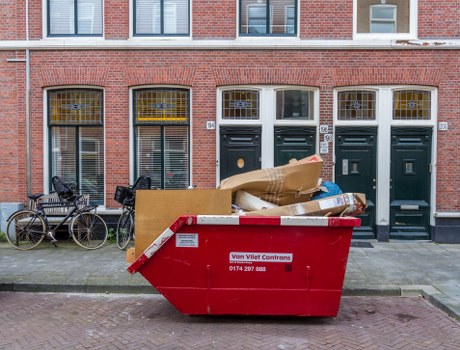 Commercial Waste Removal Ickenham is committed to delivering eco-friendly waste disposal and a practical, sustainable rubbish area model for businesses across the town. Our approach combines careful separation at source, targeted reuse, and low-carbon transport to reduce landfill, conserve resources and support local circular-economy initiatives. This page outlines our recycling percentage target, local transfer stations we use, charity partnerships, and the fleet upgrades that make Ickenham commercial waste removal greener.
We work closely with local authorities and the boroughs' approach to waste separation: clear kerbside systems for paper and cardboard, glass, metals and plastics, separate food-waste streams and garden waste where available. By aligning our commercial rubbish collection Ickenham routines with municipal collection patterns we ensure easier sorting, higher capture rates of recyclables and fewer contaminants sent to energy-from-waste or landfill facilities.
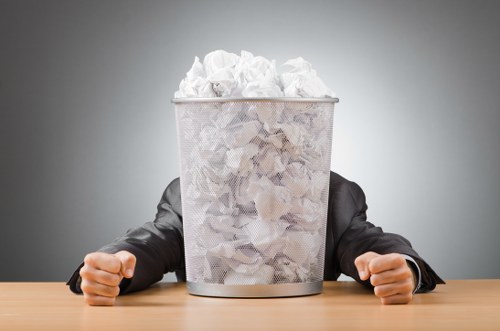 Our immediate operational goal is a recycling percentage target of 65% of all collected commercial waste by 2030. This target is ambitious but achievable through improved on-site segregation, better staff training for businesses, and investments in local processing. Regular audits of waste streams inform us which materials—cardboard from retail units, mixed plastics from offices, or segregated food waste from cafés—are most recoverable in the Ickenham area.
Local Transfer Stations and Sustainable Processing
To keep collections efficient and low-carbon we use nearby transfer stations and recycling hubs. These include borough transfer facilities and Hillingdon-area recycling centres that accept commercial loads and consolidate material for onward processing. Consolidation reduces long-haul trips and allows higher volumes of segregated materials to go to appropriate processors: paper to pulp mills, glass to remanufacturers, and metals back into industrial supply chains.
 We prioritise transfer stations that operate with sustainability credentials — sites that use solar power, active material-sorting yards, and partnerships with licensed recyclers. For the region, this collaborative network ensures that commercial waste removed from Ickenham businesses follows a documented path to reuse or recycling rather than defaulting to disposal.
Our teams provide clear labelling for bins and offer waste-stream mapping so each business understands what should go into the mixed recycling bin versus the food waste or general waste container. This reduces contamination and raises effective recycling rates for eco-friendly waste disposal Ickenham operations.
Partnerships with Charities and Reuse Organisations
We maintain active partnerships with local and national charities to maximise reuse before recycling. Items that can be refurbished — office furniture, working electronics, and good-condition textiles — are diverted to charities and social enterprises, including furniture banks and community reuse schemes. These collaborations extend product life, support local causes and cut greenhouse gas emissions associated with producing new goods.
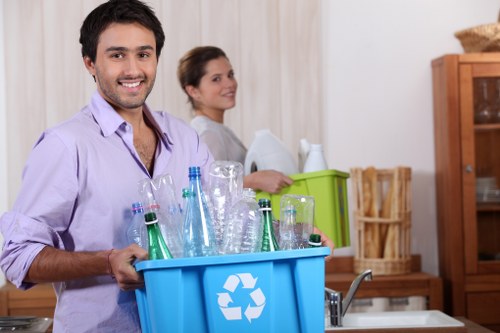 Our commercial waste removal in Ickenham team schedules regular drop-offs to accredited charities and offers documented donation logs for businesses looking to demonstrate sustainable procurement and waste reduction in their corporate reporting. For items unsuitable for reuse, materials are forwarded to specialist recyclers to recover raw materials.
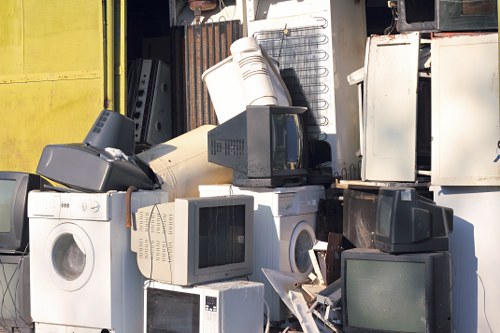 A sample of activities includes:
- Bulky reuse — furniture and fixtures redirected to local charities rather than landfill.
- E-waste segregation — secure collection of electronics for data-safe refurbishment or recovery.
- Food redistribution — surplus edible food from cafes and caterers offered to community groups when possible.
To reach our recycling percentage target we combine operational measures with reporting and incentives. Regular tonnage reports and contamination checks give businesses insight into performance, while targeted campaigns encourage correct sorting of paper, plastic, glass, metal and food waste. Where borough policy supports separate collections, we integrate commercial routes so eco-friendly waste disposal is consistent across kerbside and business services.
Our fleet investments are a key pillar of low-impact service delivery. We are rolling out low-carbon vans and electric vehicles for short urban runs, supplemented by route-optimisation software that reduces miles driven. For larger loads we use Euro-6 or equivalent low-emission vehicles until full electrification is feasible, and experiment with renewable fuels to cut lifecycle emissions associated with commercial rubbish collection Ickenham-wide.
Beyond trucks and transfer stations, sustainability is embedded in client onboarding: we offer site-specific waste reduction plans, emphasise circular-economy choices in procurement, and champion material redesign where feasible. These actions help businesses lower disposal costs and improve environmental performance while supporting the borough’s wider recycling ambitions.
We continuously review progress against our targets and update practices as local infrastructure improves. As new municipal separation schemes roll out, our commercial waste removal Ickenham services adapt to collect new streams efficiently and direct them to the right processing routes. Together with partners, charities and cleaner vehicles, our goal is a resilient, scalable model of sustainable rubbish area management that benefits businesses and the wider Ickenham community.
By choosing a provider that aligns with borough waste separation, uses low-carbon vans and maintains active reuse partnerships, businesses contribute directly to a cleaner local environment and higher circularity. Our commitment to transparency, effective sorting and verified transfer station use underpins a practical pathway to reach and exceed our recycling goals.
Stronger reuse, smarter transport, and improved separation at source — that is the future of commercial waste in Ickenham.