Commercial Waste Removal in Ickenham
Commercial waste removal in Ickenham needs to be practical, tidy and organised around how your business actually works. Our service covers regular and one-off collections for offices, shops, workshops, hospitality premises and other commercial sites that need waste taken away without unnecessary disruption. We focus on clear arrangements, careful handling and a straightforward route to request a quotation when you want waste cleared from your premises.
We handle a range of commercial waste streams, from mixed office rubbish and packaging to bulky items and general non-hazardous business waste. Where a site produces different waste types, it helps to separate what needs to be removed, what can be recycled and what must be dealt with in a more controlled way. That makes it easier to plan the collection method, estimate the labour involved and keep the process efficient from start to finish.
For many customers, the main advantage is having one point of contact for the disposal work rather than trying to coordinate several separate clearances. If you already know what needs moving, you can send over the basics and ask for pricing in plain terms. If not, the best approach is simply to describe the waste, the site access and the timing you need, and we can take it from there.
Business waste collections arranged around your site
Business waste collections are usually easiest when the collection point, the volume and the access route are all clear before the work begins. That is especially useful in shared buildings, back-of-house areas and premises where waste has to be moved without blocking customers or staff. We can remove bagged waste, cartons, loose materials and a range of non-hazardous refuse that has built up during day-to-day trading or an office clear-out.
Where a site generates more than one type of waste, it is sensible to think about how each load should be separated. Mixed material can often be handled in a single visit, but some items are better kept apart for sorting, recycling or specialist disposal. Clear descriptions make it easier to plan the right vehicle, the right labour and the right collection sequence, so the removal is as tidy as possible.
Practical waste types we can remove
The work often includes office paper, obsolete stock, packaging, broken fixtures, display material and general rubbish that no longer serves the business. In some cases, the collection may also involve dismantling light items so they can be moved safely. A sensible waste plan helps prevent useful space from filling up with things that are waiting for attention, and it can make stockrooms, back areas and workspaces easier to manage.
Office clearances and workplace tidy-ups

Office clearances are often required when a business is changing layout, reducing storage, replacing old equipment or dealing with accumulated clutter. Our office waste removal service is suitable for furniture, filing materials, bagged rubbish and items that no longer belong in the working environment. The aim is to remove what is no longer needed while keeping the remaining space orderly and accessible for staff.
Workplace tidy-ups can involve more than lifting items out of the way. Desks, chairs, shelving and storage units may need to be separated from smaller waste so the clearance stays controlled and efficient. If equipment is being removed alongside general waste, it helps to identify anything that should be kept aside, because that avoids confusion on the day and supports a more precise quotation. When you request pricing, a simple list of the main items is often enough to begin.
We also deal with clearances that arise after a reconfiguration of work areas or a change in occupancy. That may include removing surplus office furniture, old promotional materials, archive boxes or redundant fixtures. The exact approach depends on what is present, how it is stored and how easily it can be moved through the building. The more accurately the load is described, the more straightforward the clearance tends to be.
Furniture, fixtures and bulky item disposal
Commercial sites often need bulky items removed when furniture reaches the end of its use, workspaces are refitted or old stock and display items need to be cleared. We provide furniture disposal for business premises, covering items such as desks, chairs, tables, cabinets and other large pieces that are awkward to move without proper planning. The focus is on safe removal and sensible disposal rather than letting bulky waste sit unused for longer than necessary.
Bulky clearances benefit from a realistic view of access, especially in buildings with narrow corridors, stairs or shared entrances. Heavy items may need to be separated into workable sections before collection, and some pieces are best removed after a quick check of their condition and size. A concise explanation of what needs taking away is usually more useful than trying to overdescribe every object, because it keeps the booking process simple and accurate.
For customers managing larger workplace changes, this type of removal can sit alongside wider waste collections rather than needing a separate specialist visit. If there are items that still have value within the business, they can be identified before clearance begins so the wrong things are not taken. If you are unsure how to classify a piece of furniture, ask for a quote and describe the item in ordinary terms.
Mixed rubbish, recycling and responsible sorting

Commercial waste removal works best when the rubbish is assessed in categories that make sense for disposal. Some materials are straightforward mixed waste, while others are better handled through recycling or a specific disposal route. Our recycling and sustainability approach is part of the wider service, helping customers deal with the waste they produce in a more considered way while still keeping the process practical.
For business customers, the useful question is usually not whether every item can be handled in the same way, but whether the load contains anything that should be separated first. Cardboard, paper, plastics, metal components and furniture parts may all need different treatment depending on how they are mixed and how easy they are to sort. Good sorting at source often reduces confusion and supports a tidier clearance overall.
We can also remove collections that have built up over time because there was not a suitable disposal route in place. In those situations, the work may include a combination of standard rubbish and reusable or recyclable materials. The key is to describe what is present in clear, practical language. Short notes about the waste type, volume and access are more helpful than long explanations, and they make it easier to shape the removal properly.
About Ickenham
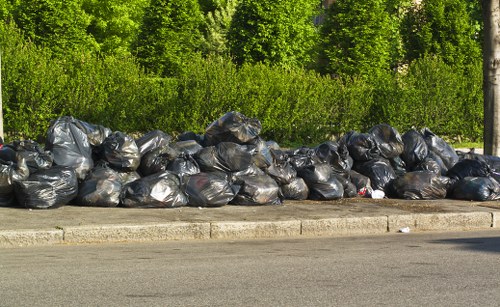
Ickenham is a village and suburban area in the London Borough of Hillingdon, on the western edge of Greater London. It developed from a historic settlement mentioned in the Domesday Book and later retained a village character despite twentieth-century suburban growth. The area lies near the boundary with Buckinghamshire and has long been shaped by transport links, local parishes and the surrounding green spaces of west London. Its older core still contains a recognisable historic street pattern, with St Giles’ Church standing as one of the most prominent landmarks and a reminder of the area’s early history. The church itself has medieval origins, while later additions and restoration work reflect changing centuries of use. Ickenham also has strong connections with nearby country landscapes and waterways, including the canal network that passes through the wider district. The Grand Union Canal runs close to the area and has contributed to movement, trade and recreation across generations. In addition to these historic features, Ickenham includes parks, residential streets and local amenities that give it a settled suburban feel. The mix of old and new is visible in the built environment, where traditional village elements sit alongside later housing and community facilities. That combination of heritage, open space and everyday local life makes Ickenham distinct within Hillingdon, with a character that is quieter than central London but still closely connected to the capital’s western edge.
Household-style clearances for business premises
Some commercial sites need the same kind of clearance associated with domestic properties, particularly when offices are converted, small premises are emptied or back rooms are used for storage. Our clearance service can include items such as general mixed contents, loose furniture, bags of unwanted materials and stored objects that no longer have a place on the premises. The aim is to keep the removal practical while respecting the layout of the building and the order in which things need to come out.
These jobs often benefit from a simple plan that distinguishes between items for disposal, items to keep and anything that needs special handling. That is useful where a workplace contains archived paperwork, temporary furniture or older fixtures that have accumulated over time. A clear list of the larger pieces, combined with a brief note about access, is usually enough to begin shaping the job. Plain descriptions help more than trying to guess technical terms.
If the contents are mixed, it is usually best to identify what is bulky, what is lightweight and what may need careful movement through the building. That can reduce handling delays and keep the process orderly. We can work with customers who need a one-off clearance or who simply want a particular area cleared and left ready for the next stage of use. Request a quotation when you know the main items and want a clear starting point.
Specialist items and controlled disposal
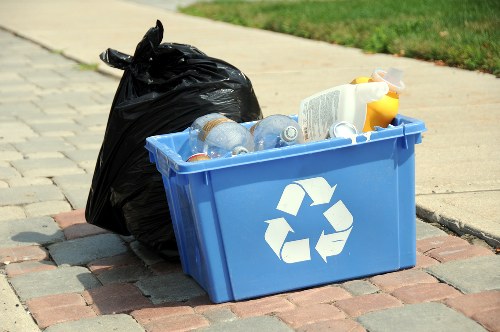
Some commercial waste needs more careful treatment than ordinary mixed rubbish. Our service includes specialist disposal routes for items such as appliances, mattresses, sofas and other objects that cannot simply be treated as standard waste. Where a load includes equipment or items with different material types, it is helpful to identify them separately so the disposal route is clear from the outset and the collection can be arranged sensibly.
Appliances and similar items can vary widely in size and weight, so removal planning matters. A single appliance may be straightforward, but several pieces together can require more handling time and more careful movement through corridors, stairwells or loading areas. The same applies to upholstered items and other bulky objects that are awkward to carry. When these items are grouped with general waste, the collection still needs a clear breakdown of what is present so the quotation reflects the work accurately.
Where a site produces items that may need segregating before disposal, the best approach is to describe the whole load and note any pieces that stand out because of size, weight or composition. That allows the work to be organised without overcomplicating the process. If you are planning a business clearance and need to know how the different items can be dealt with, the simplest next step is to get in touch for pricing.
Pricing, access and quotation details
Quotation details are usually shaped by the amount of waste, the type of items involved and how easy they are to move from the premises. Access matters as well, because stairs, narrow corridors, loading restrictions and shared entrances can all affect the time and handling required. If the waste is stored in several locations, it is worth mentioning that too, because collection from one room is not the same as collecting from multiple floors or outbuildings.
It is often enough to provide a broad outline rather than an exhaustive inventory. Useful details include the main waste category, any bulky pieces, whether items are bagged or loose, and whether parking or entry is straightforward. If there are restrictions on collection times, say so early. That keeps the conversation efficient and helps match the service to the site without unnecessary back-and-forth.
For businesses that are comparing options, a clear quotation should reflect the actual work involved rather than a generic estimate. The more precise the description, the easier it is to align the service with your schedule and your premises. If you already know the shape of the job, ask for a quotation today and use ordinary language to explain what needs removing.
Planning a collection with minimal disruption
Commercial collections are usually easiest when they are planned around opening hours, staff movement and the layout of the site. If waste is located in a reception area, stockroom or upper floor, it helps to know when access is available and whether items can be set aside before collection begins. That allows the work to proceed in a controlled way and reduces the chance of items being moved more than once.
There is also value in deciding in advance what should stay and what should go. That sounds simple, but it matters when spaces contain mixed contents, old stock and equipment that may still be in use. A short summary of the situation is often the best starting point, because it keeps the focus on what actually needs to be removed. The clearer the plan, the easier it is to complete the clearance without interrupting the rest of the business.
If you would like the site cleared in a way that is straightforward and well organised, request your quotation and describe the waste, access and timing requirements in one message. That gives the service team enough information to respond sensibly and helps you move from planning to action without delay.